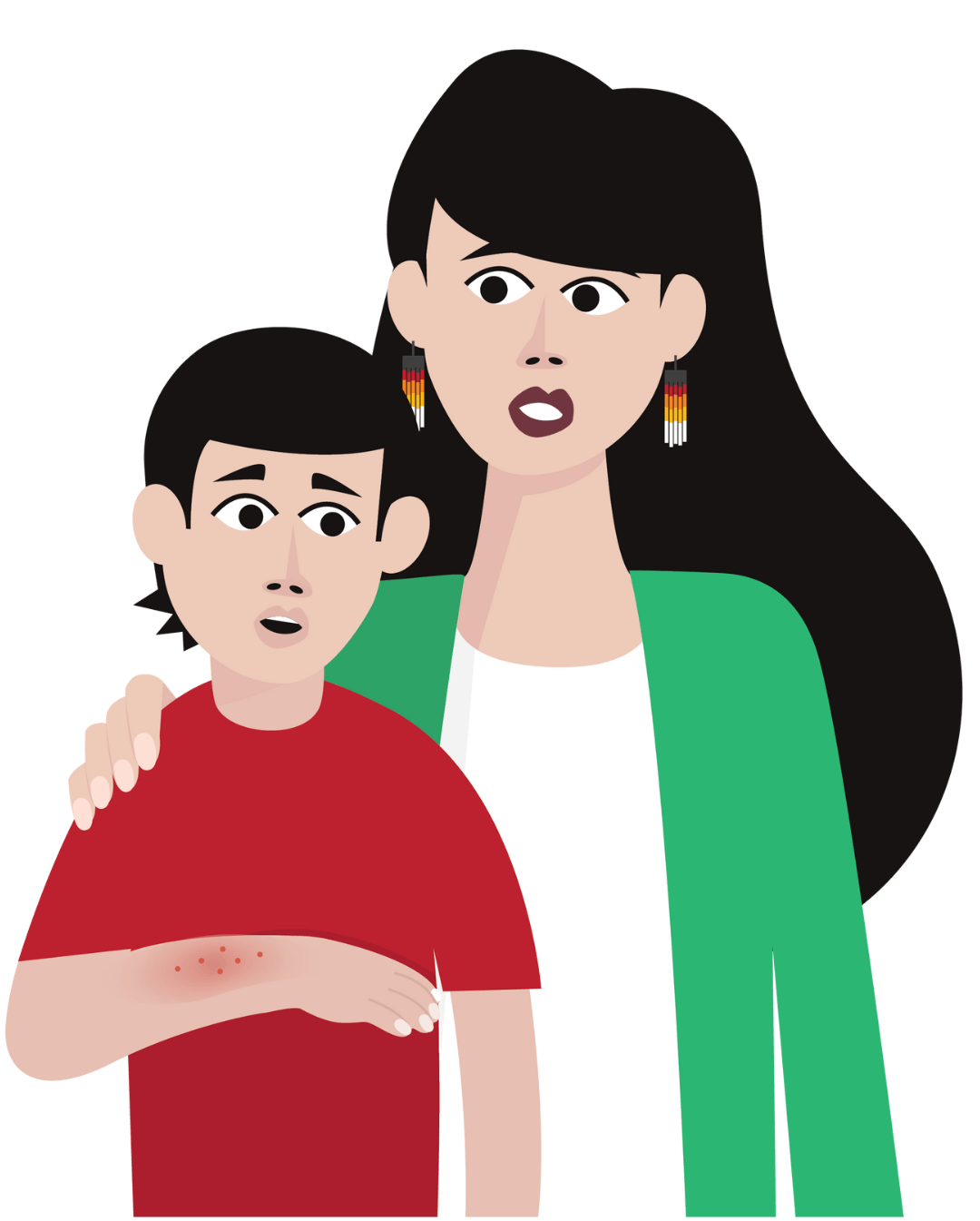
Summer is a great time to enjoy the outdoors, but too much sun can be dangerous for your health. Whether going for a walk, swimming at the lake, or just sitting in the sun, it’s important to know how to protect yourself from heat and harmful UV rays.
Why Sun Safety Matters
The sun gives off ultraviolet (UV) rays that we can’t see but can still harm our skin and eyes. Too much UV exposure can cause sunburn, skin damage, eye injuries, and even increase the risk of skin cancer.
UV rays are strongest between 11 a.m. and 3 p.m., even on cloudy days. Pay attention to the UV Index in your local weather report.
Temperature and UV index are NOT the same thing. UV rays can be intense with a high UV Index on a cool day. Always check the UV Index with the temperature before going outside so you can plan accordingly.
Understanding the UV Index
The UV Index is a number that tells you how strong the sun’s rays are on a given day. The higher the number, the greater the risk of harm to your skin and eyes, and the more you need to protect yourself. Here’s what the numbers mean:
0–2 (Low): Minimal risk. Enjoy being outside, but don’t forget sunscreen.
3–5 (Moderate): Take precautions like wearing a hat, sunglasses, and sunscreen.
6–7 (High): Protection is needed. Seek shade during midday hours, wear protective clothing, and reapply sunscreen often.
8–10 (Very High): Extra protection is essential. Avoid the sun during peak hours.
11+ (Extreme): Take all precautions. Unprotected skin can burn in minutes.
Protect Your Skin
Wearing protective clothing such as long-sleeved shirts, a wide-brimmed hat, and sunglasses with UV protection to shield your skin and eyes is the best defense against UV rays.
If wearing clothing that exposes skin, choose a broad-spectrum sunscreen with SPF 30 or higher. Sunscreens that state “water resistant” or “sport” tend to stay on better if you are in the water or sweating. Apply sunscreen 15 to 30 minutes before going outside and reapply every two hours or sooner if you’re sweating or swimming. Always reapply after being in the water. Don’t forget about your lips; use lip balms with SPF.
Stay Cool and Hydrated
Drink lots of water on hot days, even if you don’t feel thirsty. Avoid caffeine and alcohol, as they can make your body lose fluids.
Take breaks in the shade or go indoors, especially during peak sun hours. If you’re exercising or working outside, slow down and rest often to avoid getting overheated.
Watch for Signs of Heat Illness
It’s also important to recognize when your body is getting too hot. Heat exhaustion and heat stroke are serious health risks.
Heat exhaustion symptoms include:
Heavy sweating
Weakness or dizziness
Headache
Nausea or vomiting
Heat stroke is a medical emergency. Signs include:
High body temperature (over 40°C)
No sweating
Confusion or fainting
Rapid heartbeat
If someone shows these signs, move them to a cool place, give water if they’re alert, and seek medical help right away.
Enjoy Summer Safely
Getting outside is good for your health, but being sun-smart helps keep you safe. By checking the UV Index, staying cool, and protecting your skin, you can enjoy everything summer offers while keeping your body healthy. To learn more about staying safe in the sun, visit Sun Safety – Canada.ca
Provincial summer student recruitment in PMH
Provincial summer student initiative continues to prove popular in PMH
PMH has sponsored 10 medical student positions this year for the Discover Health Careers initiative. Pictured are Jeffrey Li and Dr. Kelsey Connelly who are participating this year in Brandon.
It’s summertime, and for some eager students, early exposure to health care careers can be a valuable experience that influences their future decisions. Discover Health Careers Manitoba (formerly the ‘Home for the Summer’ program) offers term positions to students within the health region to provide a ‘hands-on’ experience in clinical, hospital or healthcare site environments that apply to their areas of training. The program initially started with medical students and extends to nursing and allied healthcare students (including career areas like public/community health nursing and pharmacy). PMH and Shared Health cost share the initiative.
PMH offers 26 approved positions this year in Pharmacy, Primary Care, Mental Health, Therapy Services, Acute Care, Public Health, and Nutrition Services. For first and second-year medical students, PMH has sponsored 10 positions in Neepawa, Virden, Deloraine and Brandon (in Brandon the areas include Anesthesia, Obstetrics-Gynecology, General Surgery, Psychiatry, Radiology, the Western Manitoba Cancer Centre, Nephrology, Orthopedics, Ophthalmology and Hospitalists).
Dr. Sydney McLaughlin is preparing to start her first year of Residency in Neepawa based out of the Beautiful Plains Medical Clinic. In 2022, she spent eight weeks through the program at the clinic in Neepawa. In 2023, she participated in various locations including Dauphin, Ste. Rose, Killarney and Neepawa. She spent time seeing patients with a preceptor in a variety of clinical situations, and appreciated opportunities to advance her education.
“I found the experience to be very rewarding and a great way to continue my learning over the summer in order to further prepare myself for my clerkship years in medical school. ‘Home for the Summer’ gave me the opportunity to explore my career options while also earning an income that helped to pay for my medical school. This is something that I am very thankful I had the opportunity to pursue,” McLaughlin stated.
Students must be enrolled in a healthcare training program that fits a future need for PMH. The duration of sponsored positions varies depending on the type. Medical students’ positions are up to a maximum of six weeks. The maximum duration for nursing, allied health, and other positions is 10 weeks. The program requires an agreed-upon time commitment; students do not start or finish simultaneously.
More information on this program, as well as other Discover Health Careers initiatives, can be seen at healthcareersmanitoba.ca or Students.
Question & Answer with Dr. Sydney McLaughlin
Dr. Sydney McLaughlin holds her University of Manitoba diploma.
Dr. Sydney McLaughlin, who is preparing to start her Residency this summer in Neepawa answered some questions for us with her insight of the Discover Health Careers program. She previously participated in the Discover Health Careers (formerly known as Home for the Summer Program) in 2022 and 2023.
Can you elaborate on where you participated in the (formerly Home for the Summer) program, what you did during those weeks, and generally how you found it?
I participated in the Home for the Summer (HFTS) program during the summers of 2022 and 2023. In 2022, I spent all eight weeks of my employment at the Beautiful Plains Medical Clinic in Neepawa. During my second summer, I spent time at various locations throughout Manitoba, including Neepawa, Killarney, Ste. Rose du Lac, and Dauphin.
During these weeks I spent my time seeing patients with my preceptor in a variety of clinical situations. A typical week would include spending time in the clinic, shifts in the emergency department, seeing inpatients, helping with obstetrics, and spending some time in the operating room, either as an assist during surgical procedures or working with the anesthesia team.
I found the experience to be very rewarding and a great way to continue my learning over the summer in order to further prepare myself for my clerkship years in medical school. HFTS gave me the opportunity to explore my career options while also earning an income that helped to pay for my medical school. This is something that I am very thankful I had the opportunity to pursue.
Did anything stand out to you during that “Home for the Summer” experience? Any key learnings? Any preceptors that should be acknowledged?
HFTS taught me many things, not only about clinical medicine, but also about life in medicine and how to cope with the challenges that come with pursuing a career in medicine. I had a variety of preceptors throughout my time in HFTS that offered advice on work life balance and how to build a rewarding career. It also gave me the opportunity to further develop my procedural skills, as I gained more confidence in suturing, emergency room procedures, and management of obstetrical cases.
Dr. Sandra Wiebe was my preceptor in Neepawa for both of my summers. She provided me with lots of guidance not only for furthering my clinical medicine learning, but also my bedside manner and professional development. I am very grateful for the summers I got to spend with her and look forward to learning from her more in the future.
Dr. Brian Milligan also provided me with lots of guidance and was very great at involving me in any procedures that came up around the hospital and gave me the opportunity to learn from him whenever possible!
How have you turned that previous experience into furthering your career path? Where are you now in your health care career journey?
HFTS solidified my interest in rural medicine. I knew when I started medical school that I wanted to practice in a rural community, but having the opportunity to participate in HFTS allowed me to experience the scope of practice of a rural family physician and further strengthened my decision to pursue rural medicine as a career choice. I am now just about to start my residency in rural family medicine in my home community of Neepawa. I am looking forward to returning home and giving back to my community and continuing to learn from so many amazing physicians!
Any other comments about the initiative you feel would be worth mentioning?
HFTS is a great initiative for not only exposing medical students to rural medicine, but also giving health regions an opportunity to recruit medical students that are soon to be participating in the CaRMS match! I would highly recommend that any student pursuing a career in medicine give the program a try as it can open doors and create opportunities for learning and career advancement. It also offers great exposure to rural medicine, which may help some students to realize a career in rural medicine is perfect for them!
Country Meadows 100 Plus Club
Country Meadows 100 Plus Club
There are several residents of the Country Meadows Personal Care Home in Neepawa, who’s longevity deserves some acknowledgement.
Back Row: Rose Labuik age 103 (Jun 3), Dorothy Kilburn age 101 (102 on Aug 23), Dudley Lee 102 (May 22), Joe Dutko 101 (Feb 27), Ada Buksovich 101 (102 on Sep 17)
Front Row: Jean Lewis 100 (101 on Dec 21), Annie Dobush 110 (111 pm Sep 14), who is the oldest living resident in Manitoba!, and Treva Gorrie 105 (106 on Sep 27)
With files from Neepawa Banner and Press
First-year medical students tour PMH communities
First-year medical students tour PMH communities
Fifteen communities participate in U of M “Rural Week”
An enthusiastic bunch of first-year medical students from the University of Manitoba’s (U of M) Max Rady College of Medicine (Rady Faculty of Health Sciences) got a first-hand look at the sights and sounds of the vibrant rural communities within Prairie Mountain Health ({PMH) region. Students noted the lifestyle opportunities, attractions and experiences in rural areas and, through feedback, provided many positive reviews, including some from participants who were learning of life outside the Manitoba perimeter for the very first time.
Some 46 medical students participated in ‘Rural Week’ within the region from May 26 – May 30 and June 2 – 6. The medical students were assigned to visit 15 participating communities this year, including Brandon, Carberry, Dauphin, Deloraine, Glenboro, Grandview, Hamiota, Killarney, Neepawa, Roblin, Russell, Souris, Ste. Rose, Swan River and Virden.
Rural Week— coordinated annually by the Department of Family Medicine, Shared Health, Health Care Recruitment and Retention Office, and rural, regional health authorities enlist community stakeholders to assist with planning the lifestyle tours and events. Students also participate in various rural physician practices and tours of healthcare sites.
PMH Regional Lead of Medical Services and Chief Medical Officer Dr. Adrian Fung added:
“This exposure is as much about rural lifestyle as it is about rural medicine. Rural Week is an exciting time, as it allows us as a region to highlight our communities, staff, and facilities to the medical students while also giving the students a chance to see how rewarding and fulfilling rural practice can be.”
For example, four students in Ste. Rose provided this overview, which noted the variety of care some family physicians offer in rural areas.
“There are four physicians in Ste. Rose who serve a broad community of patients from multiple other communities such as Rorketon, Ebb and Flow, Kinosota, etc.; many patients have to drive quite far from other places in the catchment area. Dr. Blais, a Metis physician who lives in Dauphin, also drives to Ste. Rose’s hospital to work there. She also does one or two days a week at the Health Center in Ebb and Flow. She is the only physician who works at the Ebb and Flow Health Center, an action that directly serves to bridge the health inequity of access to medical care.”
PMH thanks all physician preceptors, healthcare professionals, and community volunteers whose dedication makes Rural Week successful. This important Week would not have been possible without the commitment and enthusiasm of the communities, who generously share their time and spirit to showcase all they have to offer.
Anticipated Date of Discharge (ADD) Whiteboard project
Anticipated Date of Discharge (ADD) Whiteboard project
If you have recently visited an acute care site in Prairie Mountain Health, you may have noticed an addition to our patient rooms. This spring, Prairie Mountain Health started the roll out of Anticipated Date of Discharge (ADD) on patient whiteboards in our acute care sites.
Anticipated Date of Discharge (ADD) is the date each patient is expected to be discharged from hospital. This is a projected date used for planning and will be adjusted based on the patient progress and response to treatment.
At the bedside, each patient will have a white board that will identify the patient’s daily progress and care journey during their stay in the hospital. Information displayed on the white board, which will be updated daily, will include:
Patient’s name
Upcoming tests / diagnostic exams (eg. Xrays or scans)
Name of the patient’s medical care provider and health care team
Patient’s care plan
Patient’s goals of care
Patient’s anticipated discharge / transfer date
There are many benefits to utilizing Anticipated Date of Discharge in hospital settings. ADD involves patients and families in planning for their discharge at the earliest possible point and allowing time to make any necessary arrangements such as home adaptations or simply arranging a ride home from the hospital.
Patients and families who have had the opportunity to experience the new ADD process have many positive things to say:
“We appreciate seeing updates daily and knowing the plan”- family member
“I read it every day and look for changes”- patient
“I like knowing my nurse’s name as I forget after they tell me”- patient
“I know the date of discharge is estimated but it does help us plan” – family
BRHC Critical Care Centre – Transforming Critical Care for Our Region
BRHC Critical Care Centre – Transforming Critical Care for Our Region
$4 Million Capital Campaign Project taken on by the BRHC Foundation
Every moment matters in critical care. For patients facing life-threatening medical emergencies, access to high-quality intensive care can mean the difference between life and death. The new Critical Care Centre at the Brandon Regional Health Centre (BRHC) will provide life-saving services to individuals across our region, offering advanced care, state-of-the-art equipment, and an improved healing environment. As the only Intensive Care Unit (ICU) between Winnipeg and Regina on the number one highway, this facility will be a lifeline for patients from a vast geographic area.
The demand for critical care services continues to rise, and our current infrastructure needs to expand to meet increasing acute care requirements, elevate Brandon to an intermediate care site, and support the provincial growing needs. The new Critical Care Centre will provide:
Main Level: A larger, more efficient ICU with an expanded capacity from 10 to 16 beds
Large single rooms to improve patient/family experience
Second Floor – 30 higher-acuity medical beds to support patients requiring specialized care
Large single rooms with washrooms and showers, better equipped to manage complex cases requiring close monitoring and treatment
Modern equipment and technology to enhance treatment outcomes.
Beautiful outdoor courtyard to provide a place of healing and rest for patients, families and staff
The Brandon Regional Health Centre Foundation has taken on this capital campaign project, “A Foundation for Care,” to raise $ 4 million. To reach this goal, the Foundation will invite businesses, organizations, and individuals to join us in this life-saving initiative. Your generosity will directly impact the quality of critical care available in our region. This new facility will not only serve Brandon but will also support communities across the region. Patients from rural areas, small towns, and remote communities rely on the BRHC for advanced medical care. This will reduce patient transfer to larger, more distant hospitals and keep patients near their families and support networks.
We value our donors and want to acknowledge their generosity in meaningful ways. To express gratitude, the Foundation is offering various donation packages, which will be available through the Foundation office.
Your contribution is more than a donation—it is an investment in the health and well-being of our entire region. By supporting the new Critical Care Centre, you ensure that patients needing urgent, life-saving care have access to the best medical resources available close to home.
Medical professionals will benefit from improved infrastructure, state-of-the-art equipment, and increased capacity to provide exceptional care, ultimately improving job satisfaction. This also helps recruit and retain professionals in the city and surrounding communities.
For more information on how you can support this vital project, please contact the Brandon Regional Health Centre Foundation today at [email protected] or call 204-578-4227 or stop by their office located in the Brandon Regional Health Centre main level.
Together, we can build a stronger, healthier future. Join us in making this vision a reality.
Wildfire Updates
Wildfire Updates
To the families and communities affected: please know that your loved ones are in capable, caring hands. Our thoughts are with you all during this extremely difficult time and we are here to support you.
Clients relocated to PMH facilities
To prioritize the safety and continued care of our patients, Northern Health Region has made the decision to proactively relocate higher acuity patients out of the community of Flin Flon.
Some of these patients have been relocated to facilities within the Prairie Mountain Health region. The safety and well-being of all patients and healthcare teams remains our highest priority.
Staff of Northern Health Region will keep patients and long-term care residents, and their loved ones, informed about the transfer location and care throughout this process.
Health Information and Patient Relocation Line
Call 1-888-315-9257 (toll free) or 204-788-8200 and press 1 for:
Assistance in locating your loved ones who have been relocated from hospitals and personals care homes
Information on healthcare services in your current location
Accessing Prescriptions/Pharmacy Needs
Click here to see information on accessing prescriptions & pharmacy needs for evacuees.
Our Public Health and Primary Health Care teams are active in communities and are available to assist with any health-related questions or concerns. If you need to contact the local Public Health office find an office where you are.
Home Care
If you or a loved one had home care needs and have been displaced to our region and need home care assistance, please contact our home care intake line at 1-855-474-3338. Click here for more information on home care within our region.
Know Where to go for the Right Care
From an emergency to less urgent care, there are options.
Call 911 or go to nearest OPEN Emergency Department FOR:
Chest pain or tightness
Severe difficulty breathing
Sudden weakness or paralysis
Uncontrollable bleeding
Loss of consciousness, seizure
Major trauma (life or limb-threatening injury)
Poisoning or overdose
Weakness/numbness on one side/slurred speech
Confusion/change in mental state
Ongoing fever in infants
Severe burns
Head or eye injury
Concussion/fainting
Severe allergic reaction
Asthma attack
Severe cuts that may require stitches
Broken bones & dislocated joints
Fever that persists
Severe pain
Need support due to safety concerns: can include: suicide risk, risk to others, overdose
Visit a Medical Clinic or Brandon Minor Injury & Illness ClinicFOR:
If you, or someone you know needs to speak with someone right away, or are experiencing mental distress, contact the numbers below. This can include panic or worrisome thoughts, thoughts of suicide or death, sadness and depression or if you just need support right now.
Send Well Wishes to your family & friends who have been relocated to one of our hospitals or personal care homes.
Once received, staff will print, seal & deliver your message between 8am - 4pm, weekdays. You will need to indicate the name of the facility in which the client is staying.
Roblin’s HERO Club capped off Mental Health Week in May with a hamburger sale at the Parkway Co-op in Roblin. All the proceeds were going towards the purchase of a new garden shed.
The Club also held other activities including a community walk and made time for some ‘Chair Yoga”. Local entertainers Ed Doering and Amy Wendell provided some entertainment earlier in the week. The theme of this year’s Mental Health Week was “Unmasking Mental Health”. The HERO Club thanks Parkway Co-op for their generous contributions as well as all who supported and contributed during the week.
-Pictures courtesy of Roblin Review.
PMH Attends Career Fair in Dauphin
PMH Attends Career Fair in Dauphin
PMH Recruitment Coordinator Savannaha Robertson is ready to greet participants at the Training and Employment Fair held in Dauphin May 14.
Prairie Mountain Health Recruitment Coordinators Nicole Gulenchin and Savannaha Robertson were on hand at a career event in Dauphin May 14. The Training and Employment Fair was held at the Dauphin Neighbourhood Renewal Corporation (DNRC) Community Centre and was spearheaded by DNRHC and Assiniboine College. The PMH Booth highlighted available careers throughout the community and region and also provided information on the benefits of working in health care. This was a first-time event held to highlight Parkland opportunities and community connections. Networking with employment organizations and health partners and stakeholders in the area were also key benefits of the one-day local expo.
PMH attends career day at Ebb and Flow First Nation
PMH attends career day at Ebb and Flow First Nation
Prairie Mountain Health (PMH) Addiction Services was on hand at the Ebb and Flow First Nation Career Day on April 30 and took the opportunity to display information on the many health care career opportunities within the health region and provide background on addiction services in general. The one-day event for high school and adult education students featured over 30 booths, and many presenters delivered inspiring messages and guidance to the students in attendance.
One of the many highlights included two young ladies who had the opportunity to share their science fair projects, which won awards at the University of Manitoba science fair. They will try to do the same at an upcoming national science fair. As a bonus, the lead singer from the Manitoba country music band Doc Walker even attended the event, where he gave an impactful speech, performed some songs and then welcomed attendees to get autographs/pictures and learn how to get into the music industry!
PMH Addictions Community Addictions Worker Sesley Sloboda was very pleased with the time spent at the career day.
“We had a great turnout at our booth, with many students interested in learning about our services and exploring a future career with Addiction Services. There was also some wonderful networking with other agencies that will enhance our collaborative efforts to support our clients best. I’m already looking forward to attending Ebb and Flow in the future!”
For more information on PMH careers or Addictions Services, visit the PMH website at prairiemountainhealth.ca