
Generic selectors
Exact matches only
Search in title
Search in content
Post Type Selectors
Search in posts
Search in pages


Emergency Department

The 12 Days of Christmas – But Make It Self Care

Because nobody really wants 23 birds and a pear tree for Christmas…here are 12 gifts for your mental health instead. During the holidays we typically focus on the giving of gifts, food, time and energy and we are here to remind you that you need cared for too. So, let’s give ourselves the 12 Days of Christmas Self Care Edition.

These suggestions are bite-sized additions to your holiday schedule. So, whether you are squeezing it in or have time to fill, you can add them to your day.  

Here is an easy checklist you can print or save to your phone as a reminder to give yourself the best gift of all, your time and attention.

Day 1 – A Quiet Moment: Gift yourself 10 minutes of silence — no phone, no TV, no demands. Just breathe and be.

Day 2 – Gratitude: Write down 3 things you’re thankful for. They don’t need to be big. Finding small joys or “glimmers” are powerful.

Day 3 – Connection: Reach out to one person who fills your cup. A text, call, or coffee invite counts.

sitting in a chair reading a book.

Day 4 – Movement: Give yourself 10–20 minutes of movement you enjoy such as stretching, yoga, walking, or dancing in the kitchen.

Day 5 – Get Outside: Spend a few minutes in fresh air. Look up at the sky. What can you notice around you?

Day 6 – Comfort: Enjoy a cozy comfort item such as a warm blanket, favourite socks, soft hoodie, or a warm drink.

Day 7 – Nourishment: Eat one meal or snack on purpose — not rushed, not distracted, not skipped.

Day 8 – Creativity: Do something creative for 10 minutes like colouring, baking, crafting, writing, music, or decorating.

Day 9 – Boundaries: Say no to something that drains you or delegate a task that doesn’t need to be yours.

Day 10 – Laughter: Watch, read, or do something that makes you laugh. Humour is a great form of medicine.

Day 11 – Declutter Something Small: Start small with an area like your junk drawer, purse, nightstand and reclaim it.

Day 12 – Celebration of You: Write down 3 things you are proud of from this year. No matter how big or small, they all count.

The holidays can be full, loud, and demanding or slow, quiet and lonely. These 12 gifts are reminders that your mental health matters too. You are worth time, care, comfort, and rest.

If you are looking to connect for further support, here are your options in Prairie Mountain Health:

OVER THE AGE OF 18
NORTH of Riding Mountain National Park: 1-866-332-3030
SOUTH of Riding Mountain National Park: 1-888-379-7699

UNDER THE AGE OF 18
NORTH of Riding Mountain National Park: 1-866-332-3030
ALL AREAS: 1-866-403-5459

Read More

The Spirit of Giving: Peters Donate $1 Million to New Critical Care Centre

In the true spirit of giving this holiday season, the Brandon Regional Health Centre (BRHC) Foundation is honored to announce a transformational $1 million donation from longtime Westman residents and community champions, Gord and Diane Peters.

Gord and Diane Peters

Their generous gift supports the Foundation’s capital campaign, A Foundation for Care, which is raising funds for the build and equipment needs of the BRHC’s new Critical Care Centre, currently under construction. This state-of-the-art facility will significantly enhance critical care services for patients and families across the Westman region.

Gord and Diane Peters, who have been steadfast supporters of community initiatives throughout Westman, shared their motivation for this remarkable gift:

“We are pleased to support the BRHC Foundation in their ongoing work with the BRHC. The new Critical Care Center is a much-needed addition to our hospital’s ongoing development. Our medical facility in Brandon is critical in servicing the needs of our Westman community, keeping it strong and vibrant.”

The BRHC Foundation expressed deep gratitude for this extraordinary contribution.

“This incredibly generous donation from Gord and Diane feels like an early Christmas gift for our entire community,” said Stacy Senkbeil, BRHC Foundation Board Chair. “Their kindness embodies the spirit of the holiday season and will have a lasting impact on patient care across Westman. We are truly grateful for their continued support and belief in the importance of this new Critical Care Centre.”

The new Critical Care Centre will expand capacity and improve the environment for patients requiring intensive, complex care, while also providing efficient, state-of-the-art equipment for healthcare teams.

Those wishing to learn more about the A Foundation for Care capital campaign, or who wish to contribute during this season of giving, can visit www.brhcfoundation.ca or contact the Foundation office directly.

Read More

Before You Quit: December Steps for a Healthier, Smoke-free New Year

Getting Ready in December: Prepare to Quit Nicotine

As December rolls in and the New Year gets closer, now is the perfect time to start preparing to quit nicotine, whether you use cigarettes, pouches, vaping, or other forms of tobacco. Quitting is more than just deciding to stop; it’s about understanding how you use nicotine, what triggers you, and how you’ll replace old routines with healthier ones.

Notice Your Habits and Triggers

Use December to be a detective of your own habits. Pay attention to when and why you use nicotine. Here are some questions to track:

notebook with pencil and 'my plan' written on it
  • At what time of day do you crave it most? Is it first thing in the morning, during a break, or when you’re winding down?
  • What situations trigger usage? Stress? Boredom? Social time?
  • How often do you reach for nicotine, and how much does it cost you each week or month?

Keeping a simple journal or chart will help you see patterns. Awareness builds power; knowing when and why you use gives you clues on how to quit. It will also give you extra preparation for when you are ready to quit, so you can be on top of your most challenging triggers.

Tracking what you spend on nicotine can also be a strong motivator. Add up how much you spend in a week or month on pouches, vapes, or cigarettes. Seeing that number can strengthen your resolve: this money could go elsewhere, and quitting means more cash in your pocket.

Why Quitting Matters and Why You Deserve It

There are many good reasons to quit. For your health: quitting reduces the risk of heart disease, lung illness, and other serious problems. For self-love and well-being: you deserve freedom from addiction, more energy, and a better sense of control. For your future: quitting can improve your finances, relationships, and confidence. Write your reason down and read it daily as a reminder of why quitting is important to you throughout December.

Getting Ready with the Right Tools

Preparation in December means picking the right tools before your quit day.

  • Nicotine Replacement Therapy (NRT): NRT can be a valuable tool in your toolbox to help you quit. It can help decrease the cravings for nicotine. Research ahead of time what might be the best form of NRT for you.
  • Behavioral Support: Find counselling, support groups, social media pages, or apps that will keep you supported when triggers hit. Are there people in your life that you can count on to offer support? Inform them ahead of time and explain what you will need from them.

Why This Prep Phase Matters

By spending December tracking, planning, and learning, you’re laying a strong foundation. When your quit day arrives in January, you’ll have a clearer picture of your triggers, a realistic plan, helpful tools, and financial motivation. Preparation increases your chance of success and gives you confidence that you’re not just hoping to quit, but making a real, informed decision.

For more information or to speak to a Registered Nurse about quitting smoking or vaping  contact 1-877-509-7852 (toll free) or visit Chronic Disease Education Program – Prairie Mountain Health

Find information on free resources offered in Manitoba.

Read More

Now is a wonderful time to get involved

The holiday season is here, and it’s the perfect time to spread a little extra cheer. While this time of year naturally inspires giving, it’s also a great reminder that kindness can be shared all year long. If you’ve ever thought about volunteering in a Personal Care Home (PCH) within Prairie Mountain Health, now is a wonderful time to get involved.

volunteers from across Prairie Mountain Health

Volunteering in a PCH is all about making connections. Whether you’re chatting with residents, sharing a laugh during an activity, or simply keeping someone company, those small moments mean so much. And the best part? It feels good knowing you’re making someone’s day brighter.

There are lots of ways to help out—playing bingo, joining a card game, helping with fun programs like bowling or parties, or even becoming a friendly visitor. Whatever your interests are, there’s a place for you. Volunteers truly help bring joy, comfort, and companionship to residents, and they’re an important part of the care team.

If you’re interested in volunteering, we’d love to hear from you! Send us an email at [email protected], or visit our website.

You can also find more information about volunteering across the region on the PMH website under Volunteer Services as well as our online application form.

As we wrap up another year, we want to send a big thank-you to all of our amazing volunteers—past and present. Your time, your kindness, and your heart make such a huge difference. Wishing you a warm and happy holiday season!

International Volunteer Day – December 5

Today, we’re celebrating YOU—our incredible volunteers. Your dedication and compassion help make our communities stronger, and we’re so grateful for everything you do. Thank you for being an important part of the PMH family and for making a positive difference every single day.

Read More

Take Our Kids to Work Day offers students a glimpse at health care careers

Lorena with her Daughter Avani
MDR - Neepawa
Lorena with her Daughter Avani
MDR – Neepawa

Take Our Kids to Work Day (TOKTW), a national program, occurred on November5, 2025, where Grade 9 (or equivalent) students were hosted by parents, friends, relatives and volunteers at workplaces across the country. The program supports career development by helping students connect school, the world of work, and their own futures.  Prairie Mountain Health (PMH) has been supportive of this day and accommodates requests for students wishing to enter the healthcare industry.  A total of 109 students were welcomed into programs/services within PMH spending the day in the workplace with a parent, relative, friend or volunteer experiencing and learning about the world of work as they begin to explore possible career paths.

This annual day has been a successful recruitment initiative that provides students with a look into the healthcare system. Interest in the initiative remains high every year, with 103 student requests last year and 67 students participating in 2023.

 A big thank you to everyone who took time out of their day to engage with students.  The willingness to share your knowledge and experience is meaningful and very inspiring for the students.   

Healthcare workers with their children for Take our Kids to Work day.

Read More

PMH Midwifery Team Welcomes New Staff

Prairie Mountain Health’s midwifery program is pleased to welcome two new midwives. Sophie Delaurier and Karisa Minary have joined the team and bring the current complement of midwives in PMH up to five. The new midwives are excited to be part of the team providing services within the region which includes offering prenatal, birth, postpartum and newborn care.

Born and raised in Brandon, Minary says when the midwifery program opened at the University of Manitoba, she knew it aligned with her career aspirations.

“I’ve always had a strong passion for the sciences and biology, which led me to complete a Bachelor of Science at Brandon University while exploring different healthcare paths,” Minary said.

Sophie Delaurier and Karisa Minary
Karisa Minary and Sophie Delaurier

“During that time, a family member’s experience with a midwife introduced me to the profession and its unique blend of clinical skill, advocacy, and relationship-based care. I knew the program aligned perfectly with my hopes for a meaningful, hands-on healthcare career supporting families through such an important life transition.”

Delaurier, who hails from Dauphin, had some prior experience working in different health care fields within PMH. She wanted to stay close to home and chose a career path that was meaningful to her.

“I always wanted to work in healthcare but was never really sure what field. I found out about the midwifery program through my sister’s suggestion, went for it and ended up falling in love with the work, and the unique aspects of my job!”

As Minary acknowledges, midwifery has a strong focus on compassionate and patient-centred care.

“Midwifery is a unique profession helping pregnant people through a stressful time. I am happy to give back to my community.”

Midwifery is traditionally holistic, combining an understanding of the social, emotional, cultural, spiritual, psychological and physical aspects of a woman’s reproductive experience. Midwives promote wellness in women, babies and families, both as autonomous practitioners and in collaboration with other health care providers. With midwifery care, the woman is the centre of the childbirth experience and a great influence on the health and well-being of herself and her family.

PMH continues recruitment efforts to fill two remaining open midwifery positions. Additional information about these positions can be found here: Careers – Prairie Mountain Health

As part of ongoing midwifery recruitment initiatives, PMH continues to offer clinical training and mentorship opportunities as well as participation in additional recruitment activities, including attendance at career fairs, conferences and promotion through social media.

More information about midwifery services can be found on the PMH website here: Midwifery Services – Prairie Mountain Health

Read More

40 years and counting for Dr. David O’Hagan in Ste. Rose

Dr. David O’Hagan standing at a podium, celebrating 40 years at Ste. Rose

Residents of the community of Ste. Rose du Lac and surrounding area gathered on October 18 to recognize and congratulate Dr. David O’ Hagan for reaching a career milestone. The event, attended by over 250 people and organized by both past and present Ste. Rose Health Centre staff, celebrated Dr. O’Hagan’s 40 years of dedicated and committed service to patients, residents, clients and medical students within Ste. Rose and the surrounding area.

During the event a plaque was unveiled, and the Emergency Department wing of the Ste. Rose Hospital was dedicated to Dr. O’Hagan for his services to the community.

Dr. O’Hagan came to Canada from South Africa in 1985. He first did locums in Saskatchewan in the communities of Redvers and Kipling. He fell in love with Canada and eventually the community of Ste. Rose, although he admits originally, he didn’t plan to stay long. However, universal forces intervened.

“I came here in 1985 planning to stay one year,” Dr. O’ Hagan stated.

“I met my wife in Ste. Rose, was married here and we are still here! I have received tremendous and ongoing support from my family, patients and the community.”

Michele Quennelle, Executive Director of Ste. Rose Health Centre, says Dr. O’Hagan’s impact extends far beyond the medical clinic and hospital walls.

Dr. O Hagan (far left) with his family
Dr. O Hagan (far left) pictured with his family.
-Photo courtesy of the Dauphin Herald-

“As a family physician, he has cared for generations of families—delivering babies, treating the sick, and guiding patients with both medical expertise and genuine humanity. Some folks have had the pleasure of Dr. O’Hagan serving their breakfast and have him sit next to them at the bedside for a morning visit, which is a regular occurrence at the hospital,” Quennelle said.

His legacy of work at Ste. Rose General Hospital, the East Parkland Medical Clinic, Dr. Gendreau Personal Care Home and service to nearby First Nation and Metis communities over the years has left a lasting mark.

Dr. O’Hagan’s mentorship has been a beacon of hope and inspiration for many aspiring physicians. His involvement with the Parkland Family Medicine Unit is well-regarded.  As assistant and then Unit Director of the Parkland Family Medicine Program for 15 tears, he helped many launch their own career paths through the program which, at the time, was one of the first rural programs of its kind in Canada. 

Dr. O’ Hagan was the first recipient from the Parkland Family Medicine Program to be recognized for contributions as the Family Physician of the Year for Manitoba, a feat accomplished in 2001.

A crowd of people celebrating Dr. David O'Hagan

The Physician Assistant program is also near and dear to his heart. From its inception, Dr. O’Hagan guided many military and non-military physician assistants and shared his knowledge and mentorship freely.

Prairie Mountain Health CEO Treena Slate congratulated Dr. O’Hagan for his remarkable accomplishments.

“Your long-term commitment to the community is truly exceptional. There aren’t too many doctors who remain dedicated and committed to one community or area anymore.  There is no question that you have left a far-reaching impression on individuals, families, community representatives, medical professionals, and colleagues during your 40 years. We wish you and your family all the best in future endeavours!”

Read More

November is Falls Prevention Month

Protect, check, and improve hearing and vision

November 2025

Released July 30, 2025 – McMaster University –
Authors – Dr. Paul Mick, MPH, MD, FRCSC, Dr. Roslyn M. Compton, Dr. Walter Wittich, Natalie Morog

The Bottom Line

  • Early self-screening of hearing and vision can be done online.
  • If problems are found, get help from a health professional that specializes in hearing and/or vision care.
  • Strategies to improve hearing health may include using hearing aids or other technologies, learning new communication strategies, practicing safe listening, and having regular hearing health checkups.
  • Strategies to improve vision health may include using lenses or other technologies, using eye protection, and having regular vision health checkups.

Sensory abilities naturally decline with age. In a large Canadian-based study, it was estimated that by 75 years of age, almost 50% of older adults have mild hearing or vision loss. By the age of 85 years old, about 40% have both mild hearing and vision loss. Males are more likely than females to have hearing and dual sensory loss. Since hearing loss often occurs gradually over time, many people don’t realize they have it. Sensory loss affects communication, cognition, and social relationships and is even associated with an increased risk of falls. Some signs of hearing problems include needing to ask for repetition and difficulty communicating in noisy environments. Some signs of vision problems may be blurred vision, difficulty seeing at night, sensitivity to light, double vision, loss of colour perception, seeing floaters or flashing lights, or severe eye pain. There are a number of effective strategies you can take to protect, check, and improve hearing and vision.

What the research tells us

Protect your senses: To prevent vision loss, wear sunglasses in bright sun. When in noisy environments, wear earplugs. Exposure to loud sounds can cause preventable noise-induced hearing loss. You could be at risk of noise-induced hearing loss if you spend considerable time in noisy environments, use loud machinery, use firearms, or listen to amplified music. Strategies to reduce the risk include turning down the volume, limiting your time in noisy environments, and using properly fitted hearing protection. Decibel X is a free phone app to measure noise levels. Decibel levels of 85 dB HL have the potential to be damaging to your ears.

person having their eyes examined.

Test your senses: Check your hearing and vision using your smartphone to recognize if there are sensory problems. You can also check your hearing using the free Hearing Numbers app (iOS or Android), which will help you track changes in your hearing. The World Health Organization recommends vision screening every 1-2 years for adults over 50 years old, as well as hearing screening every 5 years for adults aged 50–64 years old and every 1–3 years for adults 65 years or older. Most age-related changes to your hearing and vision can be corrected or treated if identified early. Use these links to find your closest hearing or vision healthcare provider.

Seek help if you have sensory problems: Seek help and information about how to live with sensory impairments as soon as you notice sensory problems. Additional vision rehabilitation options are available through Vision Loss Rehabilitation Canada. Many of these services are designed to consider the possibility of having more than one age-related impairment (i.e., vision and hearing loss). Adaptations and accessibility solutions are just around the corner.

Embrace technology and adopt new strategies: Depending on an individual’s situation, they may be helped by using technologies (e.g., hearing aids or glasses) and modifying communication strategies and environments (e.g., turning down noise, using closed captioning, or increasing lighting). Hearing and vision healthcare professionals can help you decide if you are ready for hearing aids or glasses. Use your technology on a regular daily basis and encourage friends and family to use their devices as well.

Hearing aids: The research tells us that hearing aids and other technologies can improve quality of life. Hearing aids can make communication easier, improve our psychosocial well-being, and provide tinnitus relief. The better the quality of input, the better one can understand and remember. Other technology aids that can improve hearing include remote microphone systems and personal amplifier systems.

Use good communication strategies: Whether you or a loved one is using hearing technology or not, good communication strategies are a must. Communication strategies are easy to use and cost no money. Some examples you can start using right away include:

  • getting someone’s attention before speaking;
  • facing the person you are speaking to and ensuring they can see you;
  • reducing background noise when possible or moving to a quieter location;
  • rephrasing rather than repeating when something is not understood;
  • taking turns speaking when in groups; and
  • having a positive attitude!

The above article, along with additional material can be found at www.Preventfalls.ca.  Prairie Mountain Health is committed to providing continuous education and resources to staff, clients and families to assist in reducing falls and injuries related to falls. 

For more information related to falls prevention, including risk checklists, resources and videos, visit PMH’s website.

Read More

World COPD Day

World COPD Day people pictured short of breath

The 2025 theme for World COPD Day is “Short of Breath, Think COPD.” World COPD Day takes place on November 19th. This year’s theme aims to emphasize that although COPD is the third leading cause of death worldwide, it is often not diagnosed correctly. COPD is a common, preventable, and treatable disease, but extensive under-diagnosis and misdiagnosis lead to patients receiving no treatment or incorrect treatment. Appropriate earlier diagnosis of COPD can have a very significant public health impact. Earlier diagnosis and treatment results in better clinical outcomes, including improvements in symptoms, lung function and quality of life.  A diagnosis of COPD should be considered in any patient who has shortness of breath, chronic cough or sputum production, a history of recurrent lower respiratory infections and/or a history of exposure to risk factors like tobacco, cooking fuels, or occupational hazards.

If you have questions about COPD or other chronic lung conditions like Asthma or Pulmonary Fibrosis – please contact the Lung Health Clinic 204-578-4203. The Lung Health Clinic offers education & self-management skills to better manage chronic lung disease and live life to the fullest. The Lung Health Clinic also offers Pulmonary Rehab Classes for people living with chronic lung disease:

  • In-depth education and exercise
  • Free, 12-week course
  • 2 sessions per year (Spring & Fall)
  • Held Wednesday afternoons 1-4pm at BRHC
Read More

October 2025 | Donations for PMH

Donation for Minnedosa Health Centre

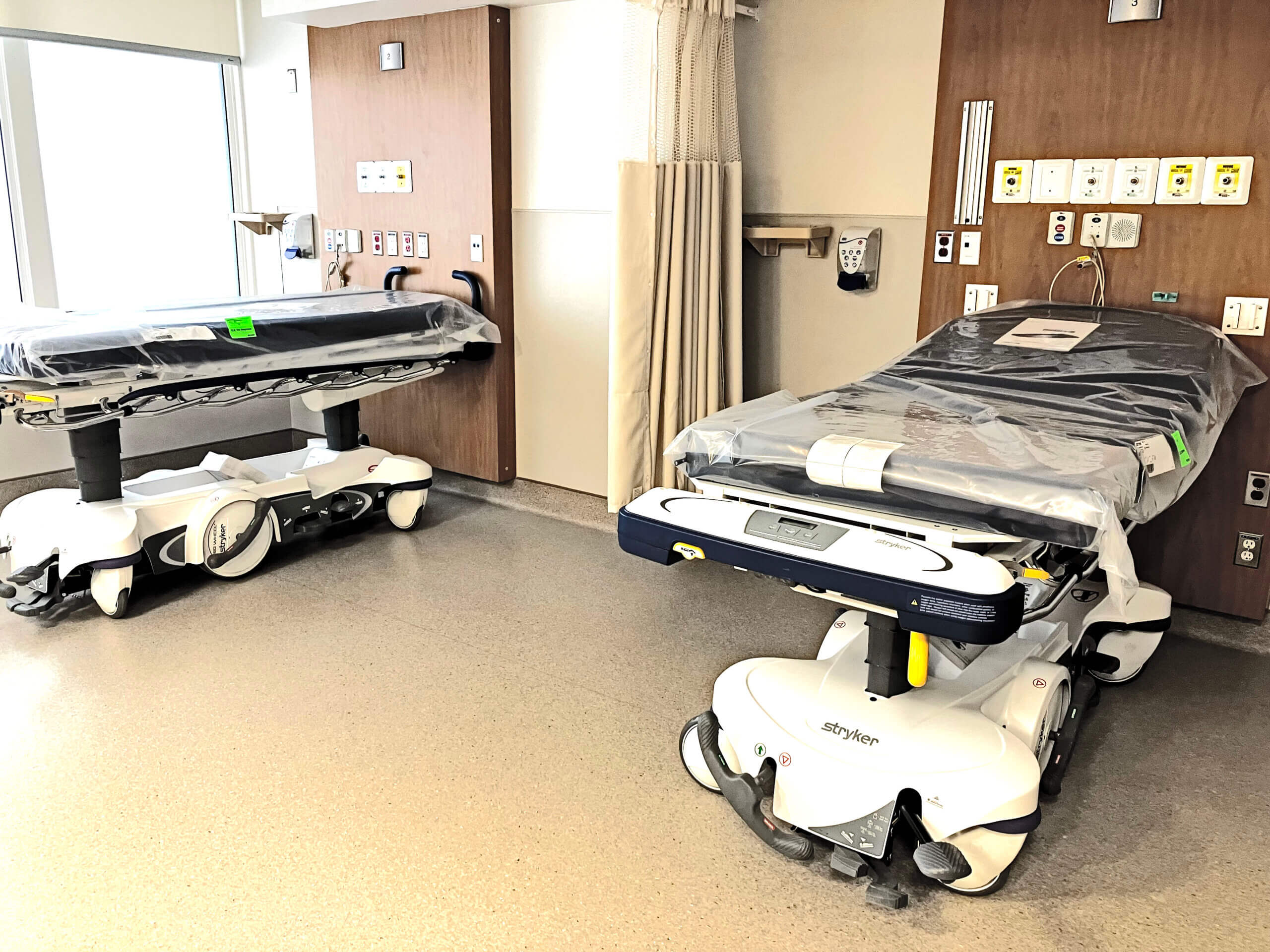
Thank you to the Minnedosa Health Foundation committee for donating a big wheel power stretcher and bladder scanner with printer, totaling $30,000.

Donation of Big Wheel Power stretcher
Lana Hogg, Health Services Manager-Acute is pictured with committee members.
Bladder scanner with printer
Lana Hogg, Health Services Manager-Acute is pictured with committee members.

Gilbert Plains Community Fund Donates to Health Care

Cryogun Equipment
Pictured with equipment is Shauna Watt Dorscheid, Nurse Practitioner

Thank you to the Gilbert Plains Community Fund for their donation of $2500 to purchase Cryogun Equipment. The cryogun equipment allows providers at Gilbert Plains Clinic to use cryotherapy – a precise, controlled spray of liquid nitrogen – to remove benign skin lesions like warts and skin tags right in the Clinic.


Virden Health Care Auxiliary contributes funds to enhance local healthcare

Dr. Hammell (at left) with members of the Virden Health Auxiliary.
Pictured is Dr. Hammell (at left) with members of the Virden Health Auxiliary. The Auxiliary and Prairie Mountain Health thank everyone for their contributions to both of the recent fundraising projects.
-Picture and files courtesy of Virden Empire-Advance

For nearly 120 years, the Virden and District Health Auxiliary’s mission has been to enrich the comfort of those in care at the Virden Health Centre,  Sherwood Home and West-Man Personal Care Home. With overwhelming support of service groups and the people of Virden and surrounding areas, the  Health Auxiliary was proudly able to raise, in record time, funds needed to purchase an ultrasound machine for the hospital.  The Health Auxiliary also acknowledged that the long-awaited LUCAS chest compression system is also now in use at the hospital. These two pieces of equipment further enhance the care provided at the Virden Health Centre.

Read More